

Introduction to Pink Eye vs Allergies
Washing, itching, redness, and eye irritation are the usual ones. Nevertheless, their reasons may be very different. There is no reason to worry that you are alone in the dark because you do not know whether you have pink eye vs allergies. Symptoms of infectious conjunctivitis and allergic reactions of the eye are similar, and it is difficult to distinguish between them.
It is medically relevant to know when that pink eye (infectious conjunctivitis) is not really the allergic eye disease. It makes you get the correct diagnosis and treatment. There are infectious conjunctivitis: that are viral and bacterial; bacterial cases might require specific treatment, especially when there is a suspicion of a bacterial infection. The allergic eye reactions are the immune reactions to the environmental or dietary allergens.
They are not contagious and usually target individuals with an atopic history who are usually accompanied by other allergies like ragweed allergy symptoms or pollen, food sensitivities, or nightshade allergies. This resource describes the causes, clinical presentation, risk factors, clinical signs of diagnosis, evidenced-based treatment, the prevention of the disease, and the recommendation of a doctor visit.
What Is Pink Eye (Conjunctivitis)?
Conjunctivitis is an inflammatory disease of the conjunctiva, which is a clear and thin tissue layer on the white part of the eye and inner eyelids. The disease is occasionally known as pink eye.
The eye is pink or reddish in case the vessels in the conjunctiva are swollen as a result of irritation or infection.
Types of Conjunctivitis
- Viral conjunctivitis
i. Most common type.
ii. Highly contagious.
iii. Typically is a post-cold infection or other respiratory infection. - Bacterial conjunctivitis
i. Caused by bacteria.
ii. Produces a thick discharge.
iii. Usually put on eye drops which contain antibiotics. - Allergic conjunctivitis
i. May also be provoked by pollen, dust mites or pet dander.
ii. Not contagious.
iii. Usually affects both eyes. - Irritant conjunctivitis
i. Consequence of chemicals, smoke, chlorine, or pollution.
In the case of comparison between pink eye vs allergies, allergetic conjunctivitis is a form of conjunctivitis. The term pink eye is however, used by most individuals to refer to the infectious (viral or bacterial) forms.
What Are Eye Allergies?
Eye allergy or allergic conjunctivitis is a condition that arises as a result of the body over reacting to harmless things known as allergens.
Histamine is released when exposed to an allergen, and this produces:
- Itching
- Redness
- Swelling
- Excessive tearing
Common triggers include:
- Pollen can be grass, tree, or weed.
- Dust mites.
- Animal dander.
- Mold spores.
- Certain foods.
- Plants of the genus Cucurbitaceae.
Pink Eye vs Allergies: Principal Dissimilarities in a Nutshell
The summarization of the differences is in the following table:
| Feature | Viral/Bacterial Pink Eye | Allergic Conjunctivitis |
| Cause | Virus or bacteria | Immune reaction to allergens |
| Contagious? | Yes (viral & bacterial) | No |
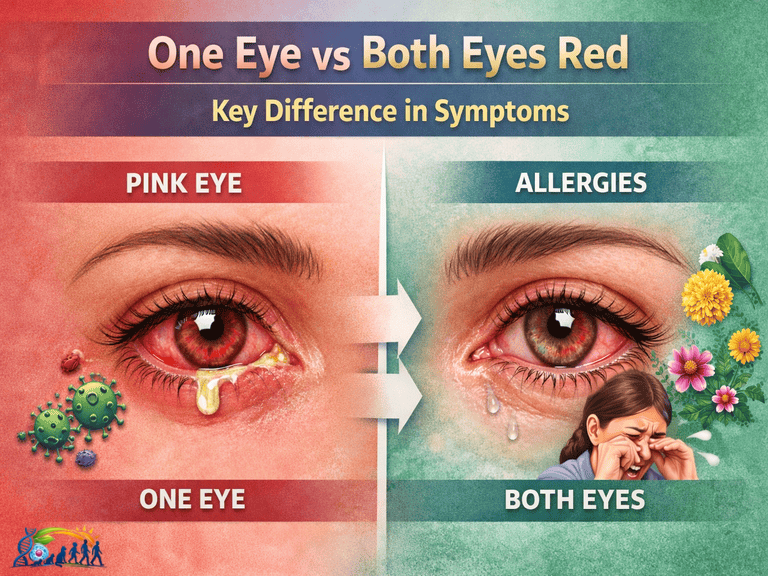
| Affects both eyes? | Often starts in one eye | Usually both eyes at same time |
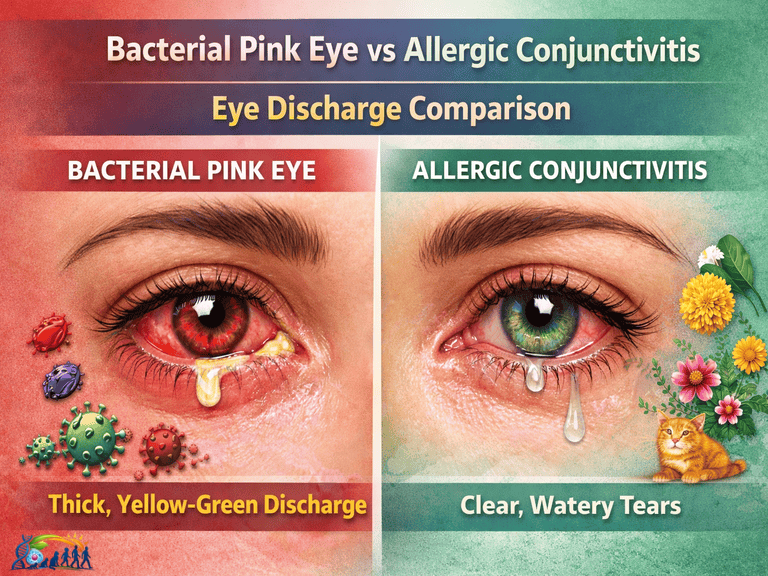
| Discharge | Thick, yellow or green (bacterial); watery (viral) | Clear, watery |
| Itching | Mild | Intense itching (hallmark symptom) |
| Swelling | Possible | Common, especially eyelids |
| Associated symptoms | Cold, sore throat, fever | Sneezing, runny nose, ragweed allergy symptoms |
| Duration | 5–14 days | Continues while allergen exposure persists |
| Treatment | May require antibiotics | Antihistamines, allergy management |
According to that table, bilateral symptoms and severe itching normally suggest allergies, whereas discharge and contagious spread are the indicators of an infectious pink eye.
Pink Eyes vs Allergy Symptoms in Details
1. Redness
The two conditions lead to the redness of the eyes.
- The redness is more profound in infectious pink eye.
- It is often accompanied by allergic redness, which is accompanied by itching and swelling.
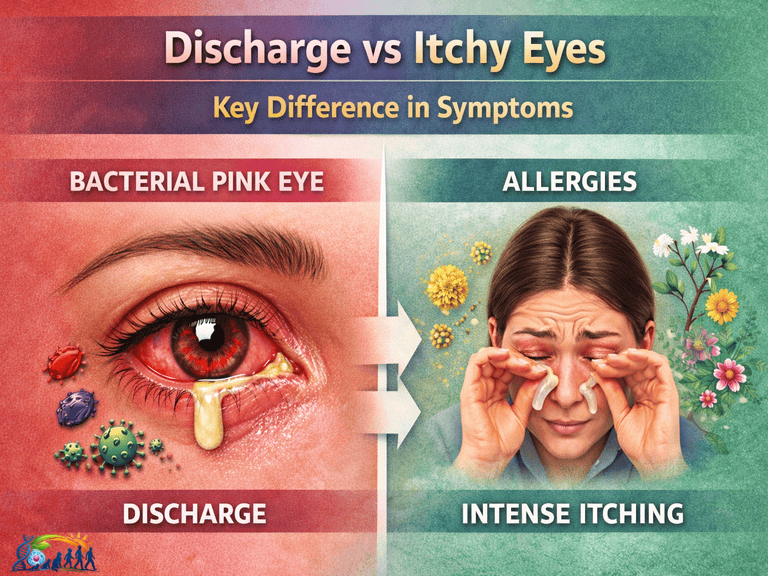
2. Discharge
Major dissimilarity is discharge:
- Bacterial pink eye: Purulent or mucous discharge; eyelids can adhere to each other in the morning.
- Viral pink eye: Tearful discharge.
- Allergies: Clear watery, pus free tears.
3. Itching
The itching is also far more intense with allergic conjunctivitis.
Individuals with allergies to flowers usually complain of an extreme itchiness in pollen seasons | flower allergies, puffy eyes
4. Swollen Eyelids
When an individual is allergic to something, the eyelids tend to swell and become puffy, particularly in high-pollen seasons.
5. Systemic Symptoms
Infectious pink eye:
- Cold symptoms
- Sore throat
- Fever
Allergic reaction:
- Sneezing
- Nose congestion
- Ragweed allergy symptoms
- Sinus pressure
Allergies and Reactions of the eyes in the season
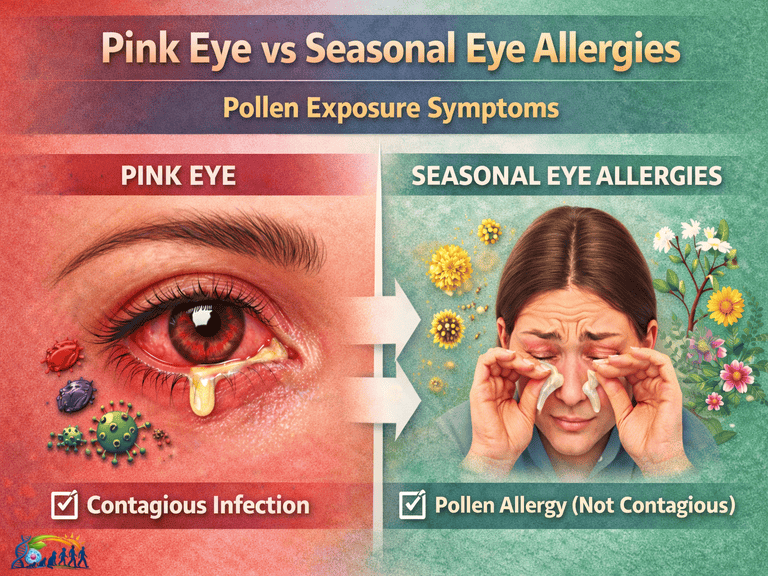
The seasonal allergic conjunctivitis usually takes place in spring and fall.
Ragweed Allergy Symptoms
One of the triggers that may cause: Ragweed pollen, which is a significant trigger in late summer and fall.
- Red, watery eyes
- Sneezing fits
- Nares congested, runny nose
- Sinus headaches
- Throat irritation
These symptoms can be accompanied by reddening of the eyes, but in this case, allergies are more probable as the cause of the pink eye than an infection.
Flower Allergies Puffy Eyes: The Reason
In spring, a great number of people have swollen eyelids after exposure to flower pollen.
The release of histamine due to the pollen triggers a process that dilates blood vessels and permits fluid to escape around the eyes, making them puffy. The allergic swelling, as opposed to bacterial pink eye, does not result in thick discharge.
Can Food Allergies Affect the Eyes?
Yes, but less commonly.
Nightshades Symptoms and Allergies of the Eyes
The nightshade family includes:
- Tomatoes
- Pepper
- Eggplants
- Potatoes
A nightshade allergy may cause:
- Itchy eyes
- Swollen faces
- Rashes on the skin
- Stomachache as a result of an allergy
Eye issues are not common, but they could be accompanied by other symptoms of allergic reactions, including hives or abdominal pain.
Causes and Risk Factors | pink eye vs allergies
Risk Factors for Pink Eye
- Being in close contact with the infected individuals.
- Sharing towels or cosmetics.
- Poor hand hygiene.
- Wearing contact lenses improperly.
Risk Factors for Allergies
- Family history of allergies
- Asthma
- Eczema
- High Pollution
- Exposure to dust, mould, or pets
Diagnosis: The manner in which doctors vary with regard to diagnosis
The majority of diagnoses are carried out as a result of a clinician’s eye examination.
Medical History Questions
A doctor may ask:
- Whether it is one eye or both?
- Is there thick discharge?
- Do you feel cold symptoms?
- Is it seasonal?
- Have you experienced allergies?
Laboratory tests are not necessary unless the symptoms are severe and chronic.
Treatment Options
Treatment for Viral Pink Eye
Pink eye in viruses normally heals itself. Apply cold on the surface, use artificial tears, and maintain the cleanliness of the area. Viruses are resistant to antibiotics.
The Bacterial Pink Eye: Treatment
Meditate the treatment of bacterial pink eye using antibiotic eye drops, warm compresss and protect yourself with contact lenses until you feel well.
Treatment of Allergic Conjunctivitis
Treat allergies by using oral antihistamines/ antihistamine eye drops, mast cell stabilisers, cold compresses, and avoiding allergens. In extreme ragweed allergy symptoms, steroid eye drops can be prescribed by the doctor.
Prevention Strategies | pink eye vs allergies
Preventing Pink Eye
- Wash your hands regularly
- Keep your hands off your eyes
- Do not share eye makeup
- Change old products
- Clean contacts lenses properly
Removing eye Allergic Reactions
- Check the level of pollen
- Keep the windows closed on bad pollen days
- Shower after exercise
- Use air purifiers
- Do not eat allergic foods such as nightshades
When to Seek Medical Help
Consult a medical professional when
- You notice blurred vision
- Sudden sharp pain
- Hyperirritable with light
- More than two weeks of discharge
- Discharge is yellow-green and profuse
Sooner help should be sought by children, the elderly, and the immunocompromised.
Complications
Pink Eye Complications
- Corneal inflammation
- Possible complications are blindness
- Chronic infection
Allergy Complications
- Long-lasting eye rubbing may result in keratoconus
- Scratching may bring about secondary infections
Special Reasons since children
Being in close contact with school children may lead to viral or bacterial pink eye. When both eyes urne red, itch and sneeze, then it is probable to have allergies.
Contact Lens Wearers
Bacterial conjunctivitis is more common among lens wearers. In case of redness:
- Take off the lenses immediately
- Do not put them on as long as the symptoms persist
- See a doctor
- Seek medical advice
Pink Eye vs. Allergies: Overview of Critical Dissimilarities
To sum up:
- Itching = allergies
- Thick discharge = bacterial infection
- One eye first = infection
- Both eyes simultaneously = allergies
- Cold symptoms = viral pink eye
- Sneezing and ragweed allergy symptoms = allergies
The Psychological Impact
Long-lasting symptoms affecting:
- The eyes may decrease productivity at work
- Self-esteem
- Social life
- Sleep quality
Pollen may cause frustration to allergic patients, particularly when they are in the midst of a peak season, and they are being bothered by flower-allergy puffiness.
Allergic eyes Disease: Long-term management of eye allergies in children
In case of allergic conjunctivitis:
- Allergy testing
- An exposure diary
- Review of your diet as a trigger of nightshades
- An immunotherapy
- Including allergy shots may reduce the symptoms in the long run
Frequently Asked Questions (FAQs)
1. What is the main difference between pink eye and eye allergies?
Ans: The main difference is the cause. Pink eye (infectious conjunctivitis) is caused by a virus or bacteria and can be contagious. Eye allergies, also called allergic conjunctivitis, are caused by an immune reaction to allergens such as pollen or dust and are not contagious | pink eye vs allergies
2. How can I tell if my red eye is an allergy?
Ans: If both eyes are red, intensely itchy, watery, and accompanied by sneezing or nasal congestion, it is more likely to be allergies. Severe itching is the key symptom of allergic conjunctivitis.
3. Does bacterial pink eye produce thick discharge?
Ans: Yes. Bacterial conjunctivitis often produces thick yellow or green discharge that may cause the eyelids to stick together, especially in the morning.
4. Can viral pink eye spread easily?
Ans: Yes. Viral conjunctivitis is highly contagious and can spread through direct contact, contaminated surfaces, or shared personal items.
5. Do allergies usually affect both eyes?
Ans: Yes. Allergic conjunctivitis typically affects both eyes at the same time because allergens impact both eyes simultaneously.
6. Are ragweed allergy symptoms linked to eye irritation?
Ans: Yes. Ragweed pollen commonly causes red, watery, itchy eyes along with sneezing, sinus pressure, and nasal congestion during late summer and autumn.
7. Can nightshade allergies cause eye problems?
Ans: Although uncommon, nightshade sensitivity may cause itchy or swollen eyes along with skin rashes or digestive discomfort.
8. How long does pink eye usually last?
Ans: Viral pink eye usually lasts 5–14 days. Bacterial conjunctivitis may improve within a few days after starting antibiotic eye drops.
9. When should I seek medical attention for eye redness?
Ans: Seek medical help if you experience blurred vision, severe eye pain, sensitivity to light, heavy discharge, or symptoms lasting more than two weeks.
10. What is the best treatment for allergic conjunctivitis?
Ans: Treatment includes antihistamine eye drops, oral antihistamines, cold compresses, and avoiding allergens. In severe cases, a doctor may prescribe short-term steroid eye drops.
Final Remarks: The Pink Eye versus Allergies
Pink eye should not be confused with pink eye vs allergies to ensure that one selects the appropriate treatment and does not receive unnecessary treatment. Symptoms are similar, but some important differences can be identified, such as the intensity of itch, the type of discharge, contagion, systemic manifestations, and diagnostic principles.
Allergies are probable in case of mild and seasonal symptoms. The long-term thick discharge is indicative of infectious conjunctivitis.
In case of doubt, consult a qualified practitioner to make the right diagnosis.