

Introduction to Technical Practice Aid

In the current healthcare and pharmaceutical spheres, teamwork and technology are key to efficient and safe medical care. Another idea that contributes to this is the technical practice aid, which is on the rise. An example of these aids is a tool, system, staff, and technology that facilitate the work of health professionals in carrying out complex tasks.
Contemporary healthcare involves numerous procedures, including diagnosing patients, handling prescriptions, dispensing drugs, running laboratory tests, maintaining records, and patient counseling. Manual processing of all these is time-consuming and increases the chances of errors. This is why, to facilitate work in hospitals, pharmacies, and labs, technical practice aids are used to organise the workflow and provide high-quality care expectations.
Technical practice support has automated machines, digital applications, technocrats, robots, artificial intelligence systems, telehealth systems, and electronic documentation. These assist professionals in working with the great amount of data, inaccurate drug dispensing, and efficient communication between the providers | technical practice aid
With the increasing complexity of health systems across the world, support mechanisms are therefore important. Continued improvements in the field of medical science can only enhance the value of technical practice in enhancing accessibility, patient safety and efficiency.
Learning the Concept of Technical Practice Aid
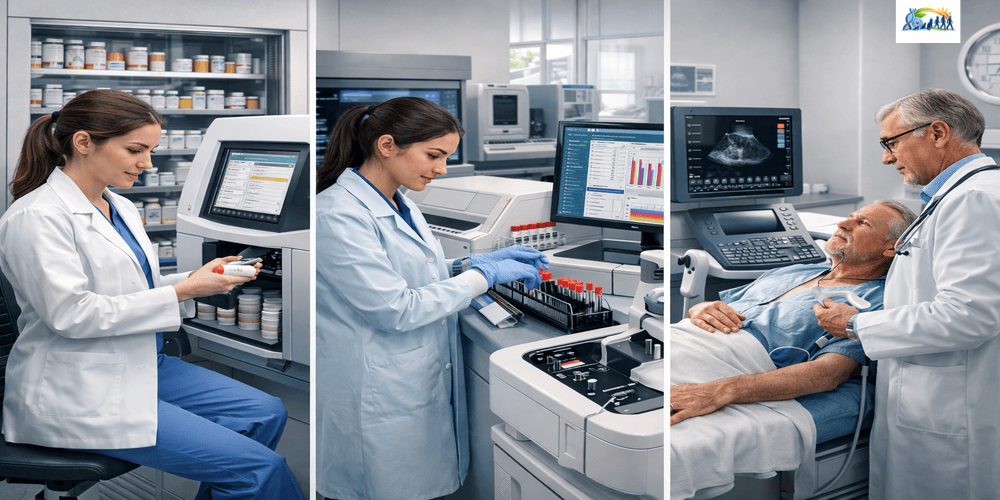
Technology, process, or human resources, which help professionals execute specialized technical tasks, are considered technical practice aids. These assistants are used to aid pharmacists, doctors, lab technologists, and nurses in performing tasks correctly and effectively in a medical facility.
Examples include:
- Pharmacists, with the assistance of pharmacy technicians.
- Electronic prescription systems- A system used in electronic prescription processing.
- Drug dispensing machines.
- Clinical laboratory machinery.
- Machines of diagnostic imaging.
- Telemedicine platforms.
- AI diagnostic tools.
These devices minimise human resources and increase the accuracy of clinical procedures.
As an example, electronic prescribing is a common practice in most hospitals. Physicians place orders electronically, and they are immediately forwarded to a pharmacy. The medication is checked and dispensed by pharmacists and technicians, reducing the number of handwriting mistakes and promoting effective communication.
In this capacity, therefore, practice aids in the technical practice serve as a supportive mechanism that combines human skills and technology.
Value of Technical Practice Assistance in Healthcare Systems
The activities in healthcare are very delicate; any little error can have a negative impact on the patients. Technical practice has helped in reducing these risks and enhancing efficiency in operation.
Improving Patient Safety
The greatest advantage is increased patient safety. Errors are identified and automatically systematically avoided before they end up in the hands of patients.
As an example, medications are verified by barcode scanners with the prescriptions. In case of any discrepancy, the system sends out alerts to staff.
Growing the Level of Operational Efficiency
Pharmacies and hospitals deal with thousands of records and prescriptions each day. These tasks and workflows are organised in the technological systems.
Automation reduces the administrative burden, and providers can pay more attention to patient care and treatment planning.
Reducing Human Errors
Dosage errors, illegible handwriting or incorrect labels usually arise as a result of manual processes. Technical aids make the procedures standard and minimize these risks.
Improving Healthcare Accessibility
The use of online telepharmacy and telemedicine devices allows practitioners to treat patients living in distant regions. Patients do not have to travel to a facility to consult with the pharmacists or doctors.
Better Data Management
Electronic health records enable health care providers to store and access patient data rapidly, enhancing coordination and continuity of care.
Types of Technical Practice Aids
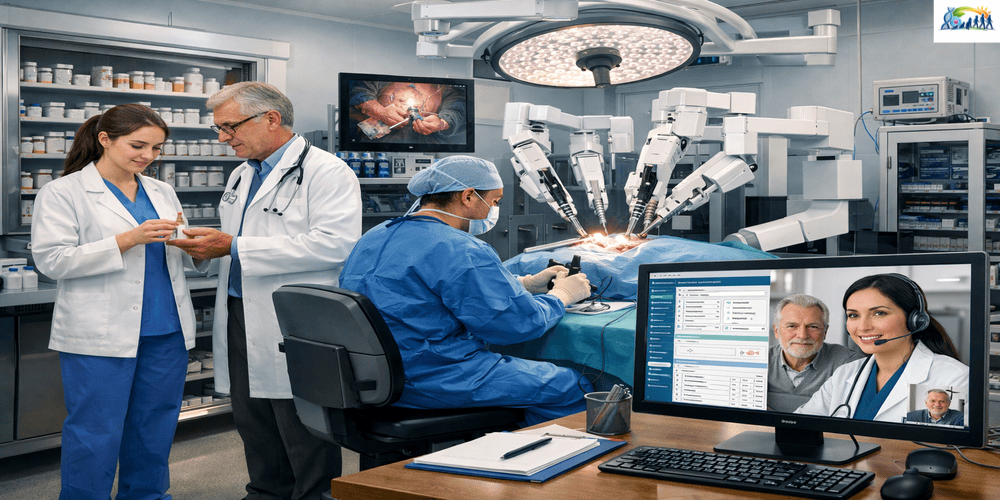
There are several categories of technical practice that are based on their role and purpose.
Human Technical Support
This involves trained technicians and assistants who perform duties under the supervision of licensed professionals.
Examples:
- Pharmacy technicians
- Laboratory technicians
- Radiology technicians
- Medical assistants
These workers maintain the flow of work and assist the senior professionals.
Mechanized Systems and Automated Systems
These are machines and equipment that are used in special medical activities.
Examples:
- Automated dispensing machines for drugs.
- Robotic surgical systems.
- Lab testing equipment.
- Automated blood analysers.
This kind of technology increases accuracy and reduces labor.
Online Information Technology
Health data management has been changed by digital systems.
Examples:
- Electronic Health Records (EHR).
- DSS Clinical decision support systems.
- The management software is a hospital management software.
- E-prescription systems.
They provide safe storage as well as easy retrieval of patient information.
Telehealth Technologies
Remote care is offered with the help of telehealth tools.
Examples:
- Telemedicine platforms
- Telepharmacy services
- Remote patient monitoring equipment.
They are particularly helpful in cases of limited facilities in the area.
Basic Elements of Technical Practice Assistance
The table below illustrates the most important elements in technical practice assistance.
| Component | Description | Role in Healthcare |
| Pharmacy Technicians | Trained assistants that assist pharmacists to dispense drugs | Improve pharmacy workflow and efficiency |
| Automated Dispensing Systems | Dispenser Cabinets Computerized, which store and dispense medications | Reduce medication errors |
| Electronic Health Records (EHRs) | Medical testing and diagnostics machines | Improve medical data management |
| Laboratory Equipment | Machines used for medical testing and diagnostics | Provide proper disease detection |
| Technologies Platforms | Communication technologies for remote consultation | Increase healthcare accessibility |
| Clinical Decision Systems | The software, which examines patient information and recommends therapy | Aids in clinical decision making |
Pharmacy Chain and Healthcare Retail System Role

The healthcare infrastructure highly depends on retail pharmacy chains. They offer drugs, health-care products, vaccinations and counselling of patients.
A lot of the big chains of pharmacies incorporate the use of technical practice. Such are prescription management systems, patient records that are digitized and inventory monitoring technologies.
Rite Aid is one such example that implemented such systems on a large-scale basis. Despite the financial difficulties experienced in recent years, the company made a great contribution towards modernization of the retail pharmacy operations.
Local Grocers Purchasing Previous Rite Aid Stores
Other grocery retailers have grown over the past few years through purchasing the old Rite Aid pharmacies. This followed the closure of numerous stores within various regions by the firm.
Local grocery chains realized the possibility to expand their retailing shops and transform them into supermarkets, health clinics or mixed grocery-pharmacy stores.
There are a number of benefits of this strategy to the communities:
1. It helps to avoid the vacancy of commercial spaces.
2. It enables the grocery retailers to increase their services.
3. It guarantees sustained services in pharmacies to the people of the area.
In most instances, the drug departments within these new-acquired stores still provide the prescription drugs and health advice.
Difficulties Facing Technical Practice Aid

Although technical practice aid has advantages, there are some challenges associated with it.
Financial Costs
The use of advanced medical technologies and automated systems may be costly to maintain and install. Smaller healthcare organisations might not be able to pay.
Training Requirements
Medical workers need special training to be able to use new technologies.
Cybersecurity Risks
Digital healthcare is sensitive and prone to cyberattacks because of the availability of patient information on digital systems.
Technology Dependence
The overdependence on technology may diminish the application of professional judgement in certain situations.
The Future of Technical Practice Aid

The future of healthcare will largely be influenced by technology. Technical assistance is likely to gain sophistication and to be incorporated into daily practice.
Artificial Intelligence in the Medical Field
Artificial intelligence will interpret healthcare data, diagnose diseases at an earlier stage, and assist physicians in making treatment decisions.
Robotics in Pharmacy
The medication dispensing, packaging and inventory shall be automated by robotic systems.
Smart Medical Devices
Smart health devices will control the vital parameters of patients and transmit real-time indicators to the provider.
Personalized Medicine
Much more sophisticated analysis tools will enable physicians to design treatment plans based on the genetic profile of a particular patient.
Some Queries
1. What is a technical practice aid in healthcare?
Ans: A technical practice aid is a tool, system, technology, or trained assistant that helps healthcare professionals perform complex medical tasks more efficiently and accurately.
2. Why are technical practice aids important in modern healthcare?
Ans: They help reduce medical errors, improve patient safety, enhance efficiency, and manage large amounts of medical data in hospitals, laboratories, and pharmacies.
3. Who are examples of human technical practice aids?
Ans: Examples include pharmacy technicians, laboratory technicians, radiology technicians, and medical assistants who support licensed healthcare professionals.
4. How do automated dispensing systems improve pharmacy services?
Ans: Automated dispensing systems store, track, and dispense medications electronically, reducing medication errors and improving workflow efficiency.
5. What role do Electronic Health Records (EHRs) play in healthcare?
Ans: Electronic Health Records store patient medical information digitally, allowing healthcare providers to access patient history quickly and improve coordination of care.
6. How does telemedicine function as a technical practice aid?
Ans: Telemedicine allows doctors and pharmacists to consult, diagnose, and monitor patients remotely through digital communication technologies.
7. What are clinical decision support systems?
Ans: Clinical decision support systems are software tools that analyse patient data and provide treatment recommendations, helping doctors make more accurate clinical decisions.
8. What are some challenges associated with technical practice aids?
Ans: Common challenges include high installation costs, staff training requirements, cybersecurity risks, and dependence on technology.
9. How does artificial intelligence support healthcare professionals?
Ans: Artificial intelligence can analyse large medical datasets, assist in early disease detection, and support doctors in diagnosis and treatment planning.
10. What is the future of technical practice aids in healthcare?
Ans: The future includes AI-driven diagnostics, robotic pharmacy systems, smart medical devices, and personalised medicine, which will further improve healthcare efficiency and patient outcomes.
Conclusion
The idea of technical practice aid has become an unavoidable element of the contemporary healthcare system. Integrating equipment with skilled workers allows organisations to provide more effective, precise and convenient care.
Technical assistance is changing the way medical workers perform their duties, whether it is automated pharmacy systems, electronic medical records, telemedicine, or artificial intelligence.
The changing scene demonstrates that the infrastructure of retail pharmacy is open to change, as witnessed in the case of the ex-pharmacy chain outlets turning into local grocery outlets. In spite of these changes, the introduction of technical aid will remain essential towards high-quality healthcare.
Technological progress will enhance the significance of technical practice assistance, and it will become a crucial factor in the future of the global health system.