

Introduction to Bunion Surgery Before and After
The deformity of the feet may have a significant impact on mobility, comfort, and the overall quality of life. Bunions are one of these problems affecting millions of people worldwide. Bunion does not only alters the shape of the foot, but can also be very uncomfortable, difficult to walk in, and restrict activities. Bunion surgery before and after is a good medical intervention when conservative interventions are ineffective in providing relief.
It is crucial to learn about bunion surgery prior to and after surgery in case someone thinks about it. The issues of the preparation, the surgery, the time of recovery, potential dangers, and the outcomes are common to the patients. Knowing the stage makes one feel more confident and ready.
Bunions are not the only conditions of the foot that may result in chronic pain and may need surgical intervention; heel spurs and calcaneal spurs may also be considered the causes of those. In the same manner, doctors can carry out bunion fusion foot surgery in severe cases of bunions to permanently stabilize the joint | heel spur surgery
Understanding Bunions
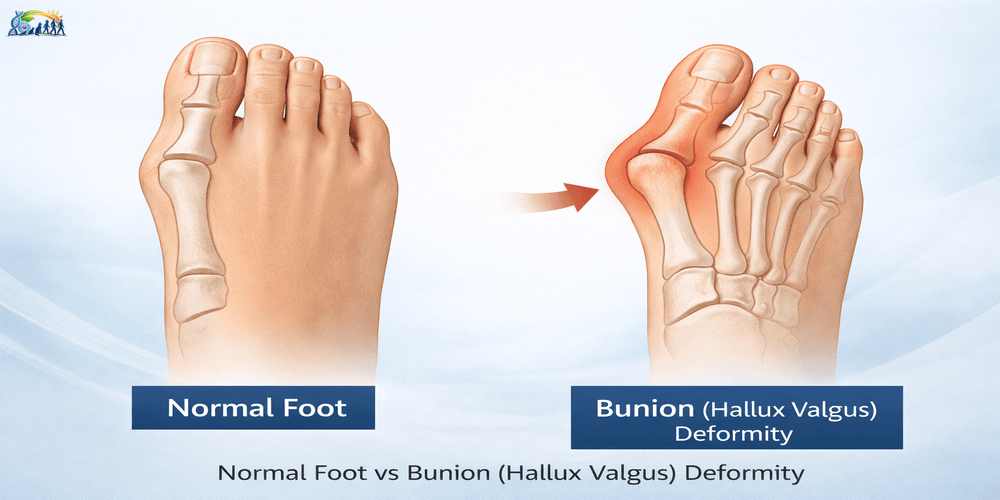
A bunion is a health condition that is medically termed as hallux valgus and is exhibited at the base of the big toe. It is presented as a bony bump that sticks out on the side of the foot. This ailment is acquired where the big toe starts slowly drifting off to the second toe, compelling the joint at the base of the toe to stick out.
With time, this maladjustment may increase and cause inflammation, swelling and intense pain.
How Bunions Develop
Bunions are usually gradual and they develop over a long period of time. Constant stress on the large toe joints causes the bones on the anterior side of the foot to become dislocated. As the deformity advances, the joint is enlarged and painful | bunion surgery before and after
Contributory Factors to Bunions
A number of factors can be associated with the risk of development of bunions:
- Family members have inherited genetic foot structure.
- High-heeled or tight, narrow, and high-heeled shoes.
- Flat feet or disordered patterns of walking.
- Arthritis of the joints.
- Standing or pressurizing feet for some time period.
Although shoes do not actually cause bunions, they can make the development of the deformity faster when of a poor fit.
Symptoms of Bunions
The presence of bunions depends on the severity of the condition that has different symptoms. In mild cases, patients can only report a small bump on the side of the foot. Nevertheless, with the increase of the deformity, symptoms intensify | bunion surgery before and after
Common Symptoms
- A bony bump, which is visible at the bottom of the big toe.
- Elevation and erythema in the periarticular region.
- Continual or discontinuous pain.
- Weakness of movement of the big toe.
- Bulky skin or callus around the toe joint.
- Problems with wearing standard shoes.
In difficult situations, bunions can make the second toe to bump against the big toe and this results in additional problems | bunion surgery before and after
Photographs of Bunions
Photographs of Bunions are crucial in making the patients understand the degree of deformity. The big toe usually appears to be angling towards the second toe, but there is a bony bump projected on the side of the foot in medical images.
Clinical photographs and X -ray images are normally used by doctors to compare bunions pre- and post-surgery. The patients are able to see a clear image of what happens in the alignment of the bones after the procedure is done through these images.
Typical bunion images show:
- The big toe is huddling inwards toward the other toes.
- There is a bump at the toe base of a high degree.
- Periarticular reddening or edema.
- In severe cases, overlapping toes.
Medical practitioners also employ imaging to strategize the surgery and determine the severity of the deformity. The use of visual comparisons assists patients to learn the desired result of the bunion surgery | bunion surgery before and after
Alternative (non-surgical) Treatment
Before surgery, physicians usually try non-surgical measures to help alleviate pain and delay the development of bunions.
The conservative methods of treatment give rise to conservative treatment:
| Treatment | Purpose |
| Wider shoes | Relieves the pressure on the bunion |
| Orthotic shoe inserts | Improves foot alignment |
| Ice therapy | Reduces swelling and inflammation |
| Pain relief medication | Controls discomfort |
| Bunion pads | Protects the joint from friction |
Even though these techniques might assist in mitigating the symptoms, they are not used to repair the bone deformity.
Surgeons may need to treat the patient when the pain turns severe and interferes with day-to-day activities.
Indications of when Bunion Surgery is advised?
Bunion surgery is normally prescribed by a doctor when the conservative therapies fail to alleviate the pain adequately. In case the deformity is of great interference to the lifestyle of the patient, surgery is considered | calcaneal spur surgery
Indications for Surgery
- Intensive pain which restricts walking or standing.
- Non-medication-responsive chronic inflammation.
- Big toe joint progressive deformity.
- Problems with wearing comfortable shoes.
- Secondary foot problems develop.
At this level, surgical fixation can be used to achieve an alignment and relieve the pain.
Bunion Surgery Preoperative
It is important that the preparation should takes place prior to surgery in order to end up successful. The patients should have a number of medical examinations and adhere to certain instructions given to them by the medical professional | bunion surgery before and after
Medical Assessment
Prior to the surgery, physicians carry out an extensive test to determine the severity of the bunion.
Diagnostic Tests
- Foot structuring physical examination.
- X-rays in order to determine bone alignment.
- Joint mobility tests.
- Review of medical history.
X-rays are also significant as they enable the surgeons to know the angle of deformity and choose the best surgery method.
A Guide to Bunion Surgery Preparation
They normally provide patients with a number of guidelines to follow before surgery and to facilitate an easy recovery | bunion surgery before and after
Pre-Surgery Preparation Recommendations
- Quitting smoking to enhance body recuperation ability.
- Do not take some medications, e.g. blood thinners.
- Organize post-operative transportation.
- Prepare a recovery space at home.
- by preparing a place to stay at home.
- Buy post-surgery shoes/walking boots.
These guidelines minimize the chances of complications during and after surgery.
Bunion Pre-operation and Post-operation
It is motivating to the patients to see the difference between pre- and post-operative. The process can have a significant effect on the looks and functioning of the feet | bunion surgery before and after
The patients usually undergo the following before surgery:
- Persistent foot pain.
- Inability to walk or stand straight.
- Pain on the side of the foot that is swollen.
- Issues with regular shoes.
Patients who have successfully undergone surgery and recovered normally report significant changes.
| Condition | Before Surgery | After Surgery |
| Toe Position | Bent inward | Properly aligned |
| Pain Level | Severe pain | Mild or no pain |
| Walking Ability | Limited mobility | Improved movement |
| Foot Appearance | Large visible bump | Natural foot shape |
Pre-and-post comparisons often demonstrate a significant change in foot positioning and comfort for a patient.
Bunion Medical Procedure
Bunion medical procedure is a process describing the clinical procedures applied in the diagnosis and treatment of bunions. The treatment can either be non-surgical or surgical, according to the severity of the condition | bunion surgery before and after
The assessment of the patient initially conducted by doctors includes:
- Physical examination of the foot.
- Foot mobility assessment.
- X-ray to ascertain the bone alignment.
Depending on the diagnosis, the physician may prescribe non-surgery measures like the use of orthotic shoes or altering shoes. In case these options cannot curb the pain, surgery can be done.
A bunion medical surgery aims to:
- Decrease the pain and inflammation.
- Correct bone misalignment.
- Rehabilitate normal foot functioning.
- Improve foot appearance.
The contemporary methods enable the surgeons to be more accurate and achieve better recovery.
Types of Bunion Surgery
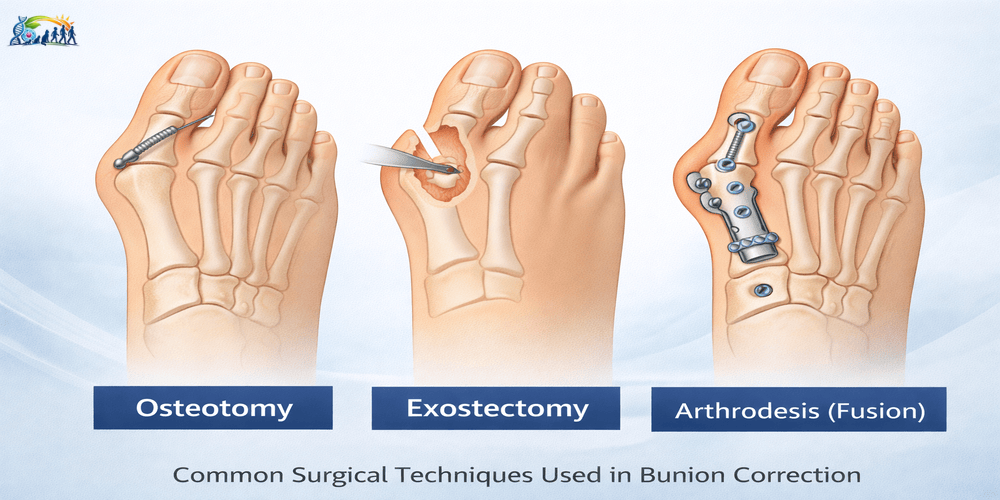
Bunions have more than 100 surgical procedures that can be used to treat them. Nevertheless, there are several broad categories of most procedures | heel spur surgery
Osteotomy
One of the most common surgeries for bunions is osteotomy. In the process, the surgeon excises and repositions the big toe joint bone.
The fixed position of the bones is assured with:
- Surgical screws
- Pins
- Plates
This is a process that assists in repairing the natural position of the toe.
Exostectomy
Exostectomy entails the cure of the bony bump which develops on the side of the big toe joint. This is normally done with other methods since eliminating the bump is not sufficient to fix the problem of alignment.
Bunion Surgery Procedure
The bunion surgery process normally ranges between 45 minutes to 2 hours, depending on the nature of the defect | bunion surgery before and after
Surgical Steps
- Local/ general anesthetic administration.
- Surgical incision in the region of the big toe.
- It can be the removal or restructuring of bone structures.
- Tendons and ligaments realignment.
- Screw- and plate-stabilization.
- Tying up the incision using stitches.
Bunion surgery is done in most cases as an outpatient, so they would go home on the same day.
Bunion Surgery
The surgery on a bunion, which is also known as bunionectomy, is used to correct the deformity on the big toe joint. The process restores the bones, ligaments, tendons and nerves around the joint.
The methods of surgery depend on the severity of the deformity | calcaneal spur surgery
Common Techniques of Bunion Surgery
| Surgery Type | Purpose |
| Osteotomy | This is repositioning of the bones through cutting |
| Exostectomy | Surgery to excise the bony bump of the toe joint |
| Arthrodesis (Fusion) | This involves permanently joining the joint |
| Tendon and Ligament Repair | Helps repair normal joint movement |
The modern developments in the surgical procedures have made bunion surgery safer or more successful, with the majority of patients reporting that their life becoming a lot easier once they are cured.
Post-Surgery of Bunion Surgery
A recovery phase is one of the most important stages of the bunion surgery. Medical instructions have to be adhered to by the patients in order to prevent improper healing | bunion surgery before and after
The foot will be bandaged and put in a protective shoe or boot immediately after an operation.
Post‑Surgery Symptoms
The frequent temporary symptoms are:
- Swelling
- Mild to moderate pain
- Surgical area hematoma
- Limited movement in the toe
Physicians normally prescribe painkillers and advise that the foot be raised.
Recovery Timeline
Bunion surgery takes a long time to heal, in a few months | bunion surgery before and after
| Recovery Stage | Time Period | Description |
| Immediate Recovery | 1–2 weeks | Rest, swelling reduction, limited walking |
| Early Healing | 3–6 weeks | Gradual walking with surgical footwear |
| Bone Stabilisation | 6–12 weeks | Bones begin to strengthen |
| Advanced Recovery | 3–4 months | Return to normal footwear |
| Full Recovery | 6 months or more | Complete healing and improved mobility |
Adherence to the suggested recovery scheme is critical to obtaining the most favourable outcomes.
Bunion Surgery Pre and Post Results
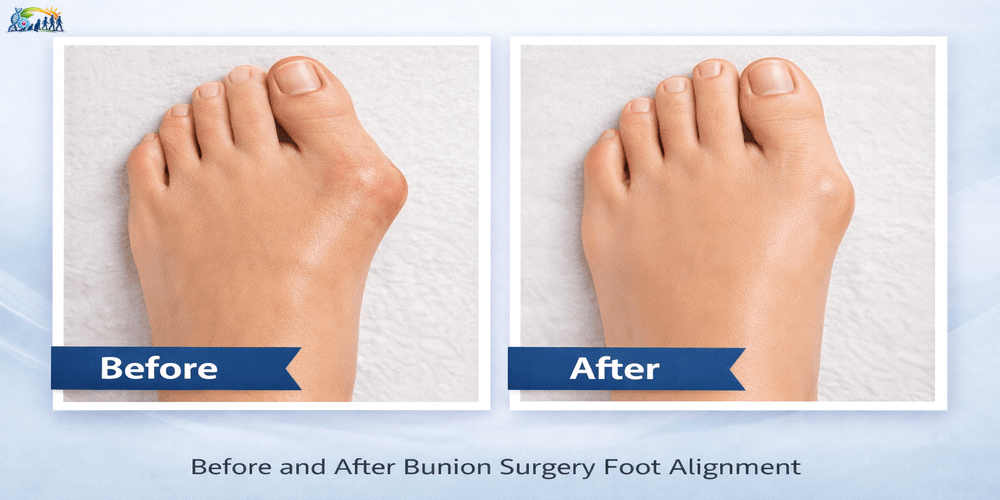
Among the most significant variables in which the patients are interested, the before and after bunion surgery differs can be named.
Before Surgery
Prior to the treatment, patients experience:
- Chronic foot pain.
- Problems with ambulation or posture.
- It has a visible foot deformity.
- As a result, issues with wearing regular shoes.
After Surgery
Following successful surgery and recovery, a significant improvement takes place in many patients.
Improvements After Surgery
| Aspect | Before Surgery | After Surgery |
| Toe Alignment | Misaligned | Corrected |
| Pain Level | Severe | Minimal or none |
| Foot Appearance | Noticeable bump | Improved shape |
| Walking Ability | Limited | Significantly improved |
The mobility and quality of life can be improved significantly by these improvements.
Hack Confessions on Recovery after foot surgery
By accepting medical recommendations and living a healthy lifestyle, patients will be able to recover better | bunion surgery before and after
Best recovery practises would be:
- The foot should be elevated as much as possible.
- Apply ice to reduce swelling.
- Use special post-surgical shoes.
- Complete follow-up visits.
- Do prescribed exercises by a physiotherapist.
These procedures enhance quick healing, and complications are minimized.
Heel Spur Surgery
The heel spur is a calcium deposit that results in the formation of a bony growth on the bottom of the heel bone. Heel spurs are widely known to relate to plantar fasciitis, which is a disease that is characterized by inflammation of the heel bone-toe connective tissue | heel spur surgery
Symptoms of Heel Spurs
- Sharp pain in the heels when walking.
- Suffering of the lower limbs following prolonged standing.
- Heel tenderness in the lower part.
A majority of the heel spurs are treated with non-surgical means. Heel spur surgery can however, be done when the conservative treatment fails.
Heel Spur Surgery Procedure
The surgeon can also debride some of the plantar fascia to ease tension in the procedure of removing the bony growth.
Calcaneal Spur Surgery
A calcaneal spur is a bone formation that develops on the heel bone. It is different but related to the rest of the spurs of the heels, as a calcaneal spur is formed by the heel bone itself | calcaneal spur surgery
Causes of Calcaneal Spurs
- Repeated stress on the heel.
- Abnormal and overweight.
- Improper footwear.
- Standing or walking in the long term.
Calcaneal Spur Surgery
In the case of surgery on the calcaneal spur, the surgeon gets rid of the spur and fills up any damaged tissue in the vicinity of the heel. This process is capable of significantly decreasing chronic heel pain and enhancing movement | calcaneal spur surgery
Potential Pitfalls and Problems
Bunion surgery has its risks, just like any other surgical operation.
The complications that may arise are:
- Infection
- Nerve damage
- Blood clots
- Recurrence of bunions
- Delayed healing
Luckily, the complications are not so common when the surgery is conducted by highly qualified surgeons and patients follow the recovery rules.
Foot Deformities Prevention: Bunions
Even though not all bunions are preventable, some lifestyle changes can reduce the chances of getting the deformities of the foot | bunion surgery before and after
Prevention strategies are:
- Put on well-fitted shoes with sufficient toe space.
- Do not wear high heels for too long.
- Eat well and maintain a healthy body weight.
- Do routines to strengthen feet regularly.
- Consult medical attention early in case of the development of symptoms.
Minor foot problems can be managed by early detection and treatment before they develop into a serious situation that will necessitate surgery.
FAQs
1. What is a bunion?
Ans: A bunion is a bony bump that forms at the base of the big toe due to joint misalignment.
2. When is bunion surgery recommended?
Ans: Bunion surgery is recommended when pain, swelling, and difficulty walking cannot be controlled with non-surgical treatments.
3. How long does bunion surgery take?
Ans: Bunion surgery usually takes about 45 minutes to 2 hours, depending on the severity of the deformity | bunion surgery before and after
4. Is bunion surgery painful?
Ans: The surgery itself is not painful because anesthesia is used, but mild discomfort can occur during recovery.
5. How long does it take to recover from bunion surgery?
Ans: Most patients start normal walking in 6–8 weeks, while full recovery may take 3–6 months.
6. Can bunions come back after surgery?
Ans: Yes, bunions can recur if proper footwear and foot care are not maintained.
7. What is bunion fusion foot surgery?
Ans: Bunion fusion surgery permanently joins the joint bones to stabilize severe bunion deformities.
8. What is the difference between a heel spur and a bunion?
Ans: A bunion affects the big toe joint, while a heel spur is a bony growth on the heel bone.
9. Can bunions be treated without surgery?
Ans: Yes, mild bunions can be managed with wider shoes, orthotics, ice therapy, and pain medication.
10. When can I wear normal shoes after bunion surgery?
Ans: Most patients can wear regular shoes again after about 6–8 weeks of recovery.
Conclusion
Bunion surgery is an effective solution for severe foot deformities that affect mobility and comfort. Understanding the condition, its causes, and treatment options helps patients make informed decisions. Modern surgical techniques correct alignment, relieve pain, and improve foot appearance. Post-surgery recovery and adherence to medical guidance are crucial for optimal results. With proper care and prevention, patients can maintain foot health and significantly enhance their quality of life | bunion surgery before and after