

Introduction to Double Jaw Surgery
One of the most sophisticated maxillofacial surgery procedures, clinically known as orthognathic surgery, is double jaw surgery. It is the process of the concomitant treatment of both the maxilla (upper jaw) and mandible (lower jaw), procuring the correct position, functioning, and aesthetic balance.
This surgery is on the border of dentistry, surgery, and facial aesthetics, and therefore is necessary medically and beneficial aesthetically. It does not involve an immediate solution and is a process of treatment extending through multiple stages, including diagnosis, orthodontics, surgery, and long-term follow-up.
Orthognathic surgery has progressed to become a highly controlled, computer-based surgery that guarantees consistent and reliable results in the world | double jaw surgery
Orthognathic Surgery Evolution in History
The progress of this procedure presents its safety and reliability in the modern world.
| Era | Development | Significance |
| Early 1900s | Basic jaw surgeries | Limited precision |
| 1950–1970 | Introduction of osteotomies | Better correction techniques |
| 1980s | Rigid fixation (plates/screws) | Faster healing |
| 2000s | 3D imaging & planning | Increased accuracy |
| Present | AI & virtual surgery | Highly predictable outcomes |
In-depth Anatomy and Biomechanics
Jaw surgery is not merely a question of bones per se, but a complex biomechanical system.
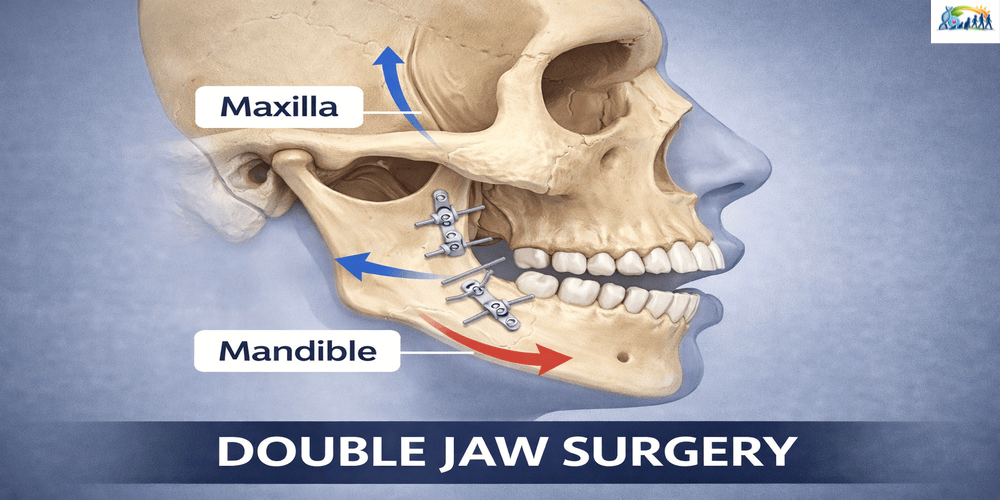
Key Anatomical Components
| Component | Role | Surgical Importance |
| Maxilla | Mid-face support | Affects nose, lips, cheeks |
| Mandible | Lower facial structure | Controls bite and chin |
| TMJ (Joint) | Jaw movement | Must remain stable |
| Muscles (Masseter, Temporalis) | Chewing force | Adapt post-surgery |
| Nerves (Inferior Alveolar) | Sensation | Risk of numbness |
Biomechanics of the Jaw Movement
- The alignment of the jaws will influence the allocation of force when chewing.
- Misalignment causes:
- Uneven pressure
- Tooth wear
- Joint stress
Biomechanics Table
| Factor | Normal Jaw | Misaligned Jaw |
| Bite Force | Even distribution | Uneven stress |
| TMJ Load | Balanced | Overloaded |
| Muscle Activity | Coordinated | Compensatory |
Factors of Growth and Development
The deformities of the jaw usually occur during adolescence | double jaw surgery
Growth Influence Table
| Factor | Effect |
| Genetics | Primary cause |
| Hormonal changes | Growth imbalance |
| Habits | Thumb sucking, mouth breathing |
| Trauma | Alters bone development |
Jaw Deformities Advanced Classification
Skeletal vs Dental Issues
| Type | Description | Treatment |
| Skeletal | Bone misalignment | Surgery required |
| Dental | Tooth misalignment | Braces sufficient |
Three-Dimensional Deformities
- Sagittal (front-back) → Overbite/underbite.
- Vertical (up-down) → Open bite.
- Transverse (side-side) → Crossbite.
End-to-end Diagnostic Process
The diagnosis of the era is very detailed and technological.
Step-by-Step Diagnosis
- Clinical examination.
- Photographic analysis.
- Radiographic imaging.
- Digital modeling.
- Functional assessment.
Advanced Diagnostic Table
| Method | Function | Advantage |
| CBCT | 3D bone scan | High precision |
| MRI | Soft tissue analysis | TMJ evaluation |
| Digital bite scan | Occlusion analysis | Accurate planning |
| AI simulation | Outcome prediction | Visual clarity |
Virtual Surgical Planning (VSP)
The modern development is one of the most significant.
How It Works
- 3D model of the patient’s face.
- Surgeon is a computerized simulation of surgery.
- Before real surgery, previewed the final result.
Benefits
| Benefit | Explanation |
| Accuracy | Millimeter precision |
| Predictability | Clear expected results |
| Safety | Reduced surgical errors |
Expanded Pre-Surgical Orthodontics
Teeth have to be properly aligned before surgeries.
Why It’s Necessary
- Misaligned jaw is also commonly associated with teeth.
- Braces decompose teeth to put them back in place.
Orthodontic Phases
| Phase | Goal |
| Alignment | Straighten teeth |
| Decompensation | Remove compensations |
| Stabilization | Prepare for surgery |
Surgery (Deep Technical Explanation)
Step-by-Step Surgical Flow
- General anaesthesia was administered.
- Cuts done in the mouth.
- Surgical bone cuts (osteotomies) were done.
- Jaws repositioned.
- Fixed with titanium plates.
- Bite checked and stabilized.
Bone Healing Process
| Stage | Description |
| Inflammation | Initial healing |
| Callus formation | New bone formation |
| Remodeling | Bone strengthens |
Fixation Methods
| Method | Description | Stability |
| Titanium plates | Permanent | High |
| Screws | Bone stabilization | High |
| Wires (old method) | Jaw immobilization | Low |
Inpatient and Emergent Care
- ICU monitoring (in some cases).
- Swelling management.
- Breathing support if needed.
Detailed Recovery Timeline
Week-by-Week Recovery
| Time | Condition |
| Week 1 | Severe swelling |
| Week 2 | Reduced pain |
| Week 4 | Functional improvement |
| Month 3 | Normal activities |
| Year 1 | Final results |
Swelling and Healing Process
Swelling peaks at 48–72 hours.
Swelling Reduction Table
| Time | Swelling Level |
| 3 Days | Maximum |
| 2 Weeks | 50% reduced |
| 3 Months | Minimal |
Speech and Functional Rehabilitation
There can be a temporary change in speech.
Rehabilitation Methods
- Speech therapy.
- Jaw exercises.
- Muscle training.
Improvements in Airways and Breathing
Airway space is greatly enhanced by using a double-jaw surgery.
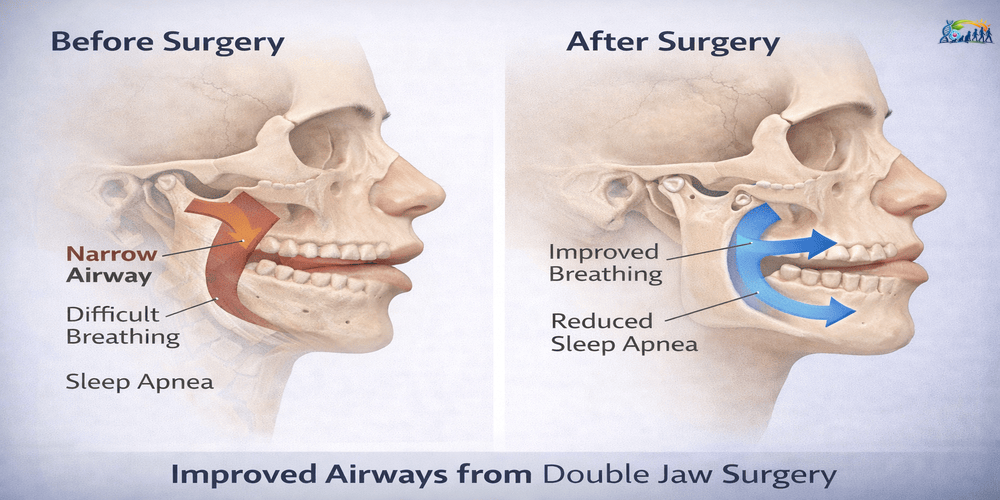
Airway Impact Table
| Condition | Before | After |
| Airway size | Narrow | Expanded |
| Breathing | Difficult | Improved |
| Sleep apnea | Severe | Reduced |
Oral Surgery and Sleep Apnea
Maxillomandibular Advancement (MMA) in severe cases.
- Moves both jaws forward.
- Opens the airway permanently.
Aesthetic Changes(Highly Detailed)
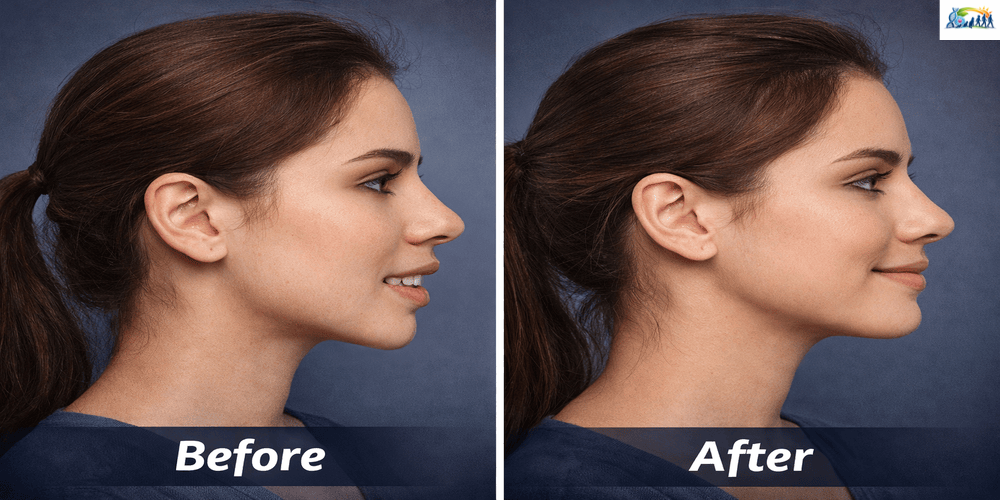
Facial Impact Areas
| Area | Change |
| Nose | Slight shape change |
| Lips | Better support |
| Chin | Improved projection |
| Cheeks | Enhanced symmetry |
Injuries and Problems (Advanced)
| Complication | Frequency | Severity |
| Numbness | Common | Temporary |
| Infection | Rare | Moderate |
| Relapse | Rare | Mild |
| TMJ disorder | Rare | Variable |
Risk Mitigation Strategies
- Experienced surgeon.
- Proper planning.
- Post-op care.
- Patient compliance.
Cost Breakdown (Detailed)
| Component | Cost Contribution |
| Surgery | 50–60% |
| Hospital | 20% |
| Orthodontics | 20% |
Insurances and Finances
- Medically necessary or not.
- Not covered in case purely cosmetic.
Post Surgery Lifestyle Adjustments
- Avoid hard foods.
- Maintain oral hygiene.
- Regular follow-ups.
Stability and Relapse in the Long-term
Relapse Factors
| Cause | Effect |
| Poor fixation | Jaw movement |
| Muscle tension | Shift |
| Growth changes | Minor relapse |
Comparison to Other Surgeries of the Face
| Procedure | Scope | Purpose |
| Rhinoplasty | Nose | Cosmetic |
| Genioplasty | Chin | Cosmetic |
| Orthognathic | Full jaw | Functional + aesthetic |
Case Studies
Case 1: Severe Underbite
- Problem: Chewing difficulty.
- Therapy: Double jaw surgery.
- Result: Normal bite.
Case 2: Sleep Apnea
- Problem: Airway blockage.
- Treatment: MMA surgery.
- Result: Improved breathing.
Psychological Metamorphosis (Complete Understanding)
Patients often experience:
- Increased self-confidence.
- Better social interactions.
- Improved mental health.
Ethical Considerations
- Plain comprehension is needed.
- Expectations of the patient should be realistic.
- Overuse of surgery should not be caused by cosmetic considerations.
Future Trends in Jaw Surgery
| Technology | Impact |
| AI planning | Better accuracy |
| Robotics | Precision surgery |
| Regenerative medicine | Faster healing |
Final Conclusive Decision
Double jaw surgery is a life-changing, medically important operation that is used to treat both functional deficiencies and cosmetic issues. It is also among the few treatment options that can effectively treat serious jaw deformities permanently.
Although this is a long process which involves commitment, the results are very rewarding. Not only do patients get better oral functionality, but it also gives them a new look and confidence.
Surgical precision has also been taken to new levels with improved technology, making orthognathic surgery safer, faster and more predictable than ever | double jaw surgery
Frequently Asked Questions
1. What is double jaw surgery?
Ans: Double jaw surgery is a procedure that corrects the position of both the upper (maxilla) and lower jaw (mandible) to improve function and facial appearance.
2. Who needs orthognathic surgery?
Ans: It is recommended for individuals with severe jaw misalignment, difficulty in chewing, speech issues, or breathing problems like sleep apnea.
3. Is double jaw surgery painful?
Ans: The surgery itself is not painful due to general anesthesia, but mild to moderate discomfort and swelling occur during recovery.
4. How long does the surgery take?
Ans: Typically, the procedure takes 3 to 6 hours, depending on the complexity of the case.
5. What is the recovery time?
Ans: Initial recovery takes about 2–6 weeks, while complete healing and final results may take up to 9–12 months.
6. Will there be visible scars?
Ans: No, as most incisions are made inside the mouth, leaving no visible external scars.
7. Can double jaw surgery improve breathing?
Ans: Yes, it can significantly improve airway space and is often used to treat obstructive sleep apnea.
8. Is the result permanent?
Ans: Yes, the results are generally permanent, although minor relapse may occur in rare cases.
9. What are the risks involved?
Ans: Common risks include temporary numbness, swelling, infection, and very rarely, jaw relapse or nerve damage.
10. How much does double jaw surgery cost?
Ans: The cost varies widely depending on the country and complexity, but typically includes surgery, hospital stay, and orthodontic treatment | double jaw surgery cost
Final Thoughts
In case you are thinking of this operation:
- Seek expert consultation.
- Understand the full journey.
- Be patient with recovery.
With a properly done double jaw surgery, quality of life, health, and self-esteem are valuable plus points | double jaw surgery
This article is truly well explained everything