

Introduction to Melatonin
Melatonin is a naturally produced hormone in the body that helps regulate the inner clock and sleep patterns. It has gained broad publicity as a sleeping aid and as a substance in immunology, antioxidant defence, and cardiovascular health. The use of melatonin as a therapeutic agent in neurological and cardiovascular diseases has captured the interest of researchers and clinicians in its therapeutic potential.
Recent researches are concerned with the interaction of melatonin with heart failure and the study of its protective and adverse effects on the heart. Despite the fact that melatonin is widely used as a nutritional supplement to improve insomnia and jet lag, its effects on the cardiovascular system are complicated and require strict scientific attention.
This paper provides a full picture in an overview of the meaning of melatonin, its functions, health advantages, and findings of the heart-failure research. The purpose of the review is to identify the clinical trials and existing literature to demonstrate whether it is a positive or negative influence on the state of the heart.
Melatonin Meaning
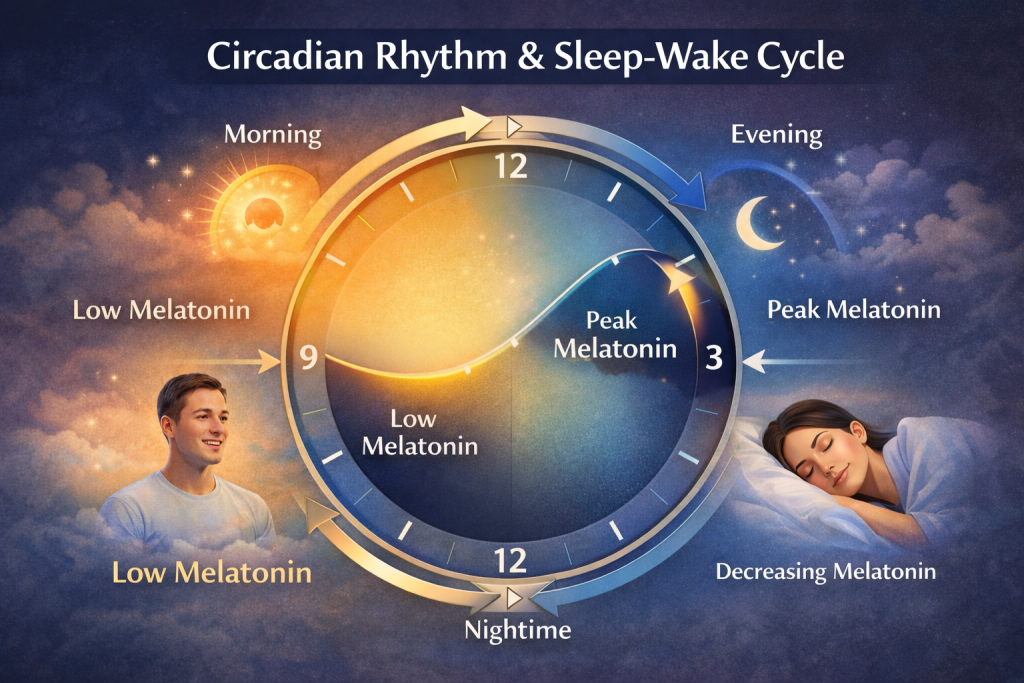
It is a hormone which is primarily synthesized by a gland known as the pineal gland, which is a tiny endocrine organ located in the deep part of the brain. It is synthesized out of an amino acid known as tryptophan via a biochemical pathway using serotonin as its intermediate.
It has a primary purpose of which is to control circadian rhythms or the internal biological clock that regulates sleep-wake cycles, hormone release, metabolism, and body temperature.
Production of melatonin is conducted on a daily basis. There are increases in levels during darkness and decreases during the day, which is an indication that the body is tired, and it’s time to sleep.
| Aspect | Description |
| Hormone Type | Neurohormone produced by the pineal gland |
| Chemical Origin | Derived through the amino acid tryptophan |
| Primary Role | Control of circadian rhythm and sleep cycle |
| Production Timing | More at night and darkness |
| Biological Function | The regulation of sleep, antioxidant defence, immune modulation |
| Supplement Form | The supplement can be in the form of tablets, capsule, and liquid supplements |
In addition to its effect in controlling sleep, it is a powerful antioxidant and anti-inflammatory molecule.
Production in Biological Mechanisms
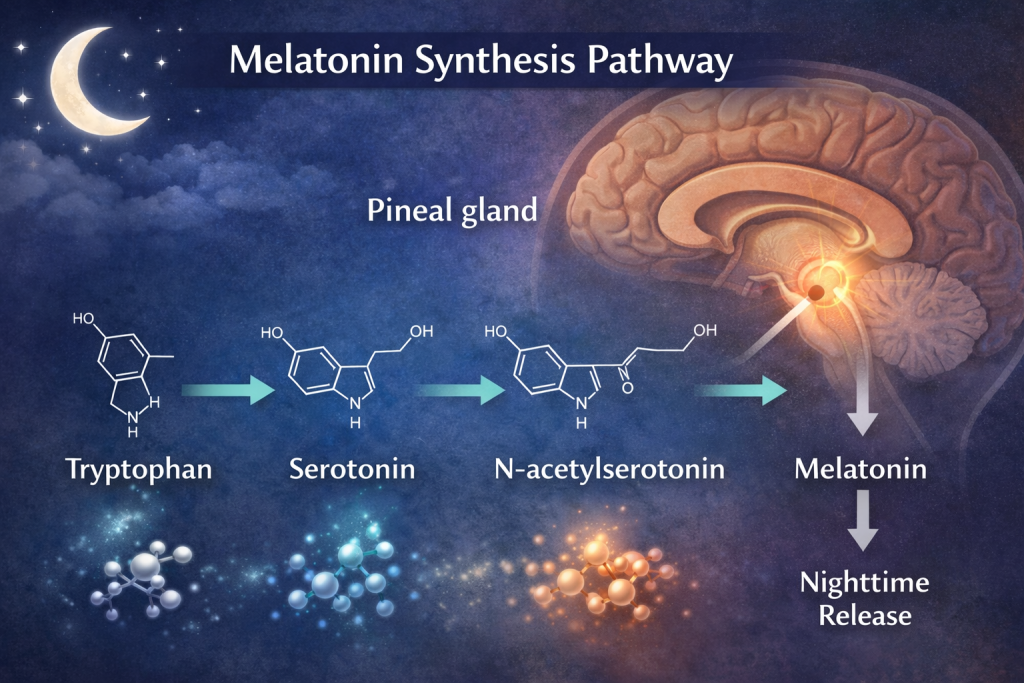
The production of melatonin begins with tryptophan, which is converted to serotonin, and finally to melatonin in pineal cells.
This is regulated by light exposure. The retinal cells relay information to the suprachiasmatic nucleus (SCN) of the brain, which is the master circadian clock. The SCN stimulates the release of melatonin when a person goes to sleep.
| Step | Process |
| 1 | Tryptophan enters the brain |
| 2 | Conversion to serotonin |
| 3 | Serotonin is converted to N-acetylserotonin |
| 4 | Acetylserotonin to melatonin |
| 5 | Discharge of the pineal gland at night |
Sleep disorders can be caused by artificial light, shift work and screen exposure, which disrupts the production of melatonin.
Functions in the human body
Most physiological systems have been associated with it, other than sleep regulation.
Temporal Organization of Circadian Rhythm
The presence of melatonin means that it is dark; an increased amount of melatonin signals to the brain that it is time to sleep.
Antioxidant Activity
It is considered to be one of the most potent natural antioxidants. It eliminates free radicals and decreases oxidative stress that is capable of ageing and decreasing the risk of chronic diseases.
It also triggers antioxidant pathways and suppresses inflammation.
Immune System Regulation
It regulates cytokines and enhances the activity of immune cells.
Metabolic Regulation
The metabolisms in glucose and insulin sensitivity are also affected by melatonin, and this interrelates the problems in circadian rhythms with metabolic disorders like diabetes and obesity.
Cardiovascular Protection
Studies are being carried out on the use of melatonin in heart health, especially its ability to prevent heart failure.
| Function | Description |
| Sleep Regulation | Maintains sleep-wake patterns |
| Antioxidant Protection | Neutralises the free radicals |
| Immune Modulation | Controls the action of immune system |
| Metabolism | Effects on glucose and lipid metabolism |
| Cardiovascular Health | Lessens cardiovascular oxidative stress in the heart tissue |
Melatonin Supplements and Their Applications
Melatonin supplements have been extensively applied in the management of sleep disorders, such as insomnia, jet lag and shift-work sleep disorder. In most nations, they are available over the counter and are used as a dietary supplement.
Uses of it’s Supplements
- Insomnia treatment.
- Jet lag management.
- Circadian rhythm disorders.
- -Sleep disorders in elderly people.
- The neurological disorders are supported.
Nonetheless, with the rise in the number of people using supplements, scientists are assessing possible adverse effects and long-term effects, in particular, cardiovascular outcomes.
Melatonin and Heart Failure

Heart failure is a chronic disease in which the heart fails to circulate sufficient blood to sustain the body. It is normally caused by a heart ailment of the coronary arteries, high blood pressure, or any other heart ailment.
Avenues of the Interaction with the Heart
The effects of it on the functioning of the heart may include the following:
- Reduction of cardiac cell oxidative stress.
- Protection against mitochondrial destruction.
- Regulation of inflammatory signalling pathways.
- Control of blood pressure.
It has been demonstrated that it could mitigate post-ischemic injury on cardiac performance by facilitating antioxidant signaling, such as AMPK/Nrf2 signaling.
| Mechanism | Effect on Heart |
| Antioxidant effect | Lessens the oxidative stress in cardiac cells |
| Anti-inflammatory effect | Precludes inflammatory harm |
| Mitochondrial defence | Assures energy synthesis in heart cells |
| Vascular activity | Increases blood pressure regulation |
| Anti-fibrotic effect | Avoids structural damage of the heart |
It is on these mechanisms that scientists have been interested in studying the possible treatment of cardiovascular diseases using melatonin.
Heart Failure Investigation: Science Data
Several experimental and clinical studies have been done on the use of it in heart failure.
Only one study reviewed its effects in patients with low ejection fraction heart failure. The study was done to examine the impact of melatonin supplements on cardiac activity and quality of life, researchers carried out a randomized controlled study with a two-group trial, in which participants were given these supplements throughout the duration of the study, 24 weeks.
The study assessed:
- Heart functioning indicators (echocardiography).
- Biomarkers of heart failure.
- Exercise capacity.
- Indications of oxidative and inflammatory stress.
It was also intended to find out the possibility of it to improve the performance of the heart and slow down the disease.
| Study Feature | Details |
| Type of study | Double-blind randomized clinical trial |
| Population | Heart failure patients |
| Treatment | 10mg melatonin daily orally |
| Duration | 24 weeks |
| Measures of outcomes | Quarantilage, inflammatory, exercise, capacity |
| Purpose | Determine therapeutic effect of melatonin |
The results of several experimental studies show that it has the potential to positively affect heart conditions and minimize oxidative stress in cardiac tissue.
Heart Problems Study: New Modes of Concern
Though the therapeutic potential of it has been found to be promising, other researchers have raised concerns regarding its use in the long run.
In an important observational study of health records of more than 130,000 adults, it was found that the individuals who used it and took it for more than a year were more susceptible to developing heart failure than those who did not take it.
The findings suggested:
- The risk of heart failure was raised by approximately 90%.
- More hospitalizations for heart failure.
- Increased total mortality of long-term users.
The researchers indicated that the study was only correlational and not causal. Premonitory conditions like chronic insomnia may be a source of cardiovascular risk, but not melatonin.
| Observation | Result |
| Study Population | Population more than 130,000 adults |
| Follow-up Period | About 5 years |
| Incidence Heart Failure | Higher in long-term melatonin users |
| Hospitalization Risk | Vastly augmented |
| Critical Interpretation | Association observed, causation not confirmed |
This is what leads to the recommendation of taking melatonin supplements with caution and observing long-term usage.
Cardioprotective Effect
Experimental research pointing to the protective effect of it on the heart is evident in most studies, but observational research expresses some concerns.
As an example, animal model studies of chronic heart failure have revealed that it has a beneficial effect of improving mitochondrial activity and decreasing inflammation when used together with conventional heart medication like captopril.
Another meta-analysis of randomised controlled trials also reported that the use of it will improve cardiac functional outcomes such as left ventricular ejection fraction (LVEF) and reduce cardiac damage biomarkers.
| Effect | Mechanism |
| Reduced oxidative stress | Neutralizes free radicals |
| Improved mitochondrial function | Enhances cellular energy production |
| Reduced cardiac inflammation | Limits tissue damage |
| Improved cardiac output | Supports heart pumping efficiency |
| Lower cardiac biomarkers | Indicates reduced heart injury |
These studies have shown that it has therapeutic applications in cardiovascular medicine.
Side Effects and Risks
Despite the fact that it is usually safe when used as a short-term intervention, there are side effects that might occur in some people.
Common Side Effects
- Drowsiness during daytime
- Headache
- Nausea
- Dizziness
- Hormonal changes
The long-term safety is still unclear, particularly on cardiovascular outcomes.
| Risk | Description |
| Cardiovascular concerns | Possible association with heart failure |
| Hormonal imbalance | May have an impact on reproductive hormones |
| Drug interactions | Can be combined with blood-pressure drugs |
| Sleep disturbance | Sleep can be disturbed due to excessive doses |
This is why it is advisable to have medical control when taking melatonin a supplement regularly.
Factors that will affect it’s levels
A number of lifestyle and environment influences the natural production of it.
Key Influencing Factors
- Light exposure at night
- Irregular sleep schedules
- Shift work
- Ageing
- Stress
It is important to maintain sleep hygiene, which helps in the production of natural melatonin.
| Factor | Impact |
| Exposure to blue light | Inhibits the release of Melatonin |
| Night shift work | Alters circadian rhythm |
| Age | The levels of melatonin reduce with age |
| Stress | Changes hormonal balance |
| One Before bedtime screens | Increase the delay of melatonin |
Future Research Directions
Researchers are still researching the use of it in cardiovascular disease. Current research focuses on:
- Large‑scale clinical trials.
- Safety of the supplements in the long run.
- Optimal therapeutic dosage.
- Cardiovascular drug interaction.
Further research will either exonerate or prove that it is an effective therapy for heart failure, or it can be risky to use in the long term.
Frequently Asked Questions (FAQs)
1. Does melatonin make it hard to wake up?
Ans: Melatonin generally does not make waking up difficult when taken in recommended doses. However, higher doses may cause morning drowsiness or grogginess in some individuals.
2. Does melatonin cause heart failure?
Ans: There is no clear scientific evidence that melatonin directly causes heart failure. Some observational studies suggest an association with long-term use, but this does not prove causation.
3. Does melatonin expire?
Ans: Yes, melatonin supplements do expire. Most products remain effective for about 1–2 years from the manufacturing date if stored properly in a cool and dry place.
4. How much melatonin should an adult take?
Ans: Most adults take 1–5 mg of melatonin about 30–60 minutes before bedtime. Doctors may recommend different doses depending on sleep disorders or medical conditions.
5. Is it safe to take every night?
Ans: Short-term nightly use is generally considered safe for most adults. However, long-term use should be discussed with a healthcare professional.
6. Can melatonin lower blood pressure?
Ans: Some studies suggest melatonin may slightly reduce nighttime blood pressure by relaxing blood vessels and reducing oxidative stress.
7. How long does melatonin take to work?
Ans: Melatonin usually starts working within 20–60 minutes after taking it, which is why it is recommended shortly before bedtime.
8. Can melatonin interact with medications?
Ans: Yes. It may interact with medications such as blood pressure drugs, antidepressants, and anticoagulants, so medical advice is recommended before regular use.
9. Is melatonin a natural hormone?
Ans: Yes, it is a naturally produced hormone in the body, mainly secreted by the pineal gland in the brain during darkness.
10. Can melatonin improve heart health?
Ans: Some research suggests it may support heart health by reducing oxidative stress and inflammation, but more clinical trials are needed to confirm its therapeutic benefits.
Conclusion
Melatonin is a crucial hormone that controls the sleeping cycles and has a role in numerous physiological mechanisms. The explanation of its meaning reveals that it is immensely further than the regulation of sleep and provides anti-oxidant protection, immune-regulatory, and cardiovascular benefits.
There are scientific studies on melatonin and heart failure, which provide inconclusive results. According to experimental studies, it is possible that it can help the heart by alleviating oxidative stress, inflammation, and mitochondrial dysfunction. Potential beneficial effects of cardiac functioning have also been proposed in clinical trials on patients with heart failure.
Cardiac concerns
Observations of recent results of the melatonin and cardiac issues have expressed worries about potential correlations between long-time use and heart failure risks. These are inconclusive findings which need investigation.
Altogether, it is a valuable biological molecule and has strong therapeutic possibilities. Although the use of melatonin supplements in the short term is usually safe, long-term use should be taken with caution and under the recommendation of a medical expert until more conclusive research is conducted.