

Introduction to Rodrygo Injury
The term “Rodrygo injury” has been a trending topic in football talk shows and sports media. His physical misfortunes extend far beyond mere team-selection problems. Being a main striker of Real Madrid CF and the star of Brazil, any spell of absence is followed worldwide.
Search queries like ‘Rodrygo injury’, ‘Rodrygo fitness update’ and ‘Rodrygo blessure’ are indications of international interest in the physical state of Rodrygo. This paper provides a comprehensive medical, tactical, psychological, and performance-based analysis of the Rodrygo injury case.
What Makes the Rodrygo Injury a Minute Ballad
Modern football is a violent game. Players have ceased to be merely athletes, and they are now brands, strategic weapons, and symbols of nations. Rodrygo embodies all three.
The instance of the “Rodrygo injury” trend that keeps appearing on the Internet is a sign:
- Real Madrid’s positional lack of integrity.
- Brazilian dilemma of selection.
- Market speculation by the analysts.
- Emotional reactions of fans.
Besides hyperbolic headlines, one must realise that the Rodrygo injury cannot be completely understood without researching into the science of sports-medicine, workload management and match congestion.
The Recent Injury Reports
The media was able to cover the last matches, and Rodrygo was not comfortable on the field and was replaced due to tactical reasons. Initial media guesses were that it was mild muscular tightness or hamstring strain. Even though the official statements were restrained, football news media amplified the story.
Headlines contained such phrases as:
- Attack blow, before a decisive match.
- “Rodrygo’s fitness race against time.
- Fear of potential Rodrigo injury.
This coverage is dramatic, but it highlights the role of Rodrygo in the Real Madrid attack system. Even the slightest muscular issue at a hectic game schedule can possess enormous effects on the rotation of the squad.
The international search query like blessure rodrygo also shows the extent to which the news is popular among multilingual people.
Medical Classification: What Injury is Most Likely?
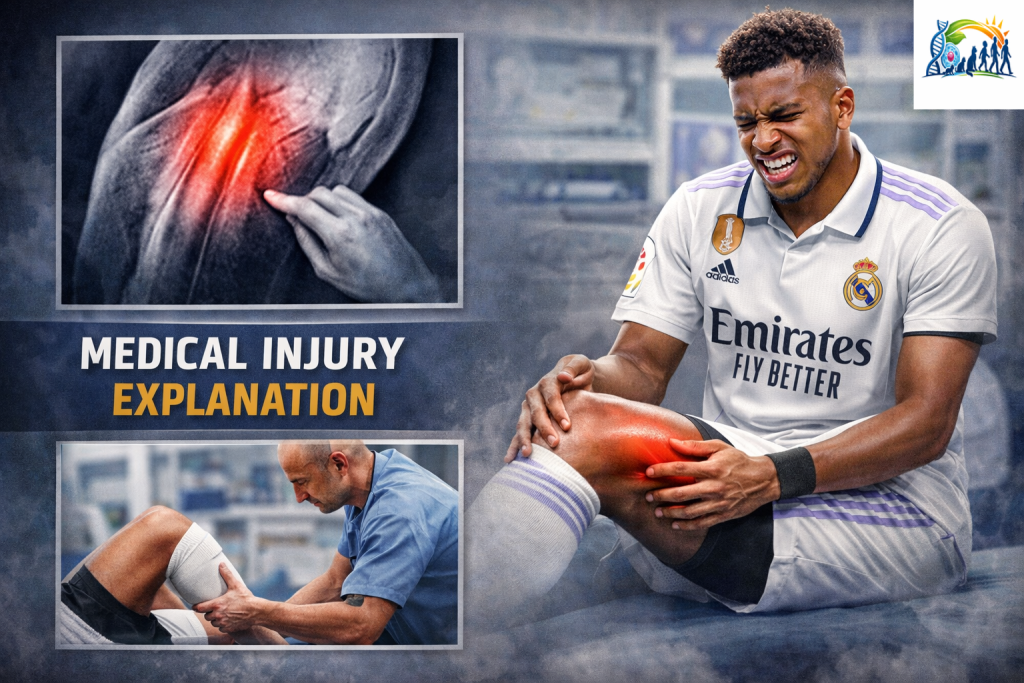
Elite wingers are usually the victims:
- Grade 1 muscle strain
- Grade 2 muscle tear
- Ankle ligament sprain
- Inflammation from fatigue
The medical comparison is discussed in the following table:
| Type of Injury | Description | Level of severity | Recovery Time | Risk of recurrence |
| Grade 1 Strain | Microscopic destruction of muscle fibres | Mild | 7–14 days | Moderate |
| Grade 2 Tear | Partial tear of muscle fibres | Moderate | 3–6 weeks | High |
| Hamstring Overload | Tightness, fatigability | Mild–Moderate | 1–3 weeks | Moderate |
| Ankle Sprain | Ligament overstretch | Moderate | 2–6 weeks | Low–Moderate |
| Tendon Irritation | Overuse inflammation | Mild | 1–2 weeks | Low |
Lasting as most conversations allude, the Rodrygo injury does not seem to have caused a structural tear, but a muscular overload, which is promising to heal.
Biomechanics: The Playing Style of Rodrygo that Lands Him in Injury
Rodrygo’s strengths include:
- Rapid acceleration
- Explosive sprint bursts
- Sudden directional shifts
- High‑intensity pressing
The stress factors on the demanding biomechanics are:
- Hamstrings
- Quadriceps
- Hip flexors
- Calf complex
There is a high risk of muscle strain in contemporary football when it comes to high-speed repeated sprinting without proper rest. The GPS tracking data on the elite clubs indicate that wide attackers experience the highest sprint loads during a match.
This way, the physiological need is not astonishing with regard to the Rodrygo injury.
Fixure Congestion and Load Management
The highest-level players will be involved in:
- Domestic league matches
- Champions League fixtures
- National team qualifiers
- International friendlies
In high-demand seasons, the recovery period will be reduced to 72 hours or fewer, reducing the schedule on:
- Neuromuscular fatigue
- Micro‑tear accumulation
- Inflammation
- Reduced reaction time
The reason behind the injuries, such as the one raised recently regarding a Rodrigo injury, is usually due to the poor management of loads and not a one-time injury.
Strategic Impression on Real Madrid
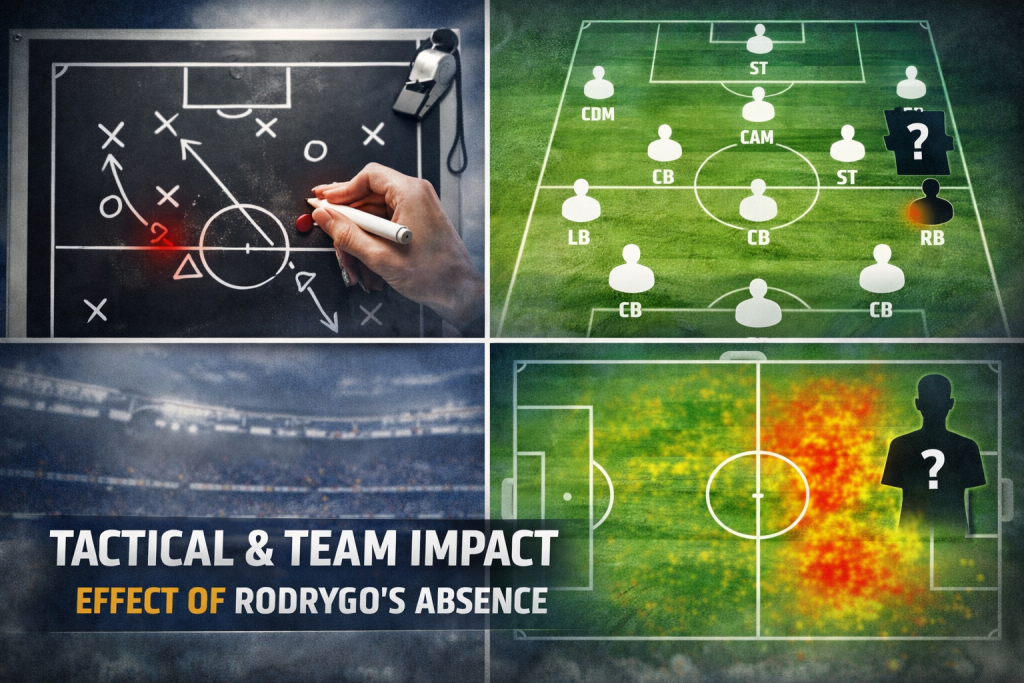
Rodrygo provides:
- Vertical width
- Central link‑up play
- Quick transitional attack
- Defensive pressing support
In his absence, some of these changes in tactics might be:
- Narrow diamond formation.
- Midfield‑heavy control.
- Alternative rotation of the winger.
- Further dependence on central attackers.
Despite Real Madrid’s depth in the squad, the chemistry with teammates usually makes Rodrygo swift in the attack transition. Fluidity may be decreased by a temporary loss.
Psychological Undertones
The damage does not only concern muscle tissue.
Adverse Psychological Repercussions:
- Fear of losing starting role.
- How do you feel about your performance upon coming back?
- Marriage aggravates rhythmic disruption.
Positive Psychological implications:
- Mental reset.
- Tactical analysis time.
- Motivation boost.
- Recovery focus.
The perennial stress of elite sports psychologists is that brief injury spells can sometimes result in long-term resilience.
Advantages and Disadvantages
Each failure has two implications. A moderated opinion is presented below:
Pros and Cons Table
| Dimension | Pros | Cons |
| Physical Health | Prevents overuse burnout | Immediate loss of rhythm |
| Squad Depth | Backup players gain exposure | Reduced attacking unpredictability |
| Tactical Flexibility | Encourages formation experimentation | Temporary chemistry disruption |
| Long-Term Longevity | Allows muscle regeneration | Short-term performance drop |
| Psychological Growth | Builds resilience | Confidence risk if rushed |
This is a balanced analysis that does not overstate the emotions and offers a sober perspective of the Rodrygo injury.
The Elite Football Recovery Protocol
The contemporary rehabilitation is based upon scientific stages:
Phase 1: Acute Protection
- Ice therapy
- Compression
- Controlled rest
Phase 2: Controlled Mobility
- Light stretching
- Isometric strengthening
- Core activation
Phase 3: Progressive Loading
- Resistance training
- Sprint reintroduction
- Agility drills
Phase 4: Match Simulation
- Small‑sided games
- Tactical reintegration
- Medical clearance
The success of Rodrygo’s recovery is based on not rendering an early reappearance.
Risk of Re‑Injury
Statistics of the elite European leagues have indicated:
- 15–25 % of hamstring injuries recur
- Repetitive risk is raised by 40% by early yielding.
- Large schedule congestion increases the likelihood of strain.
In case Rodrygo comes back too soon, the chances of re-injury become very high. But when there are good sports science guidelines, recurrence will be reduced.
The media Discourses vs Medical Reality
Media tend to employ dramatic language:
- “Injury crisis”
- “Season in danger”
- “Major setback”
As a matter of fact, most winger injuries are Grade 1 mild strains.
Knowledge of this difference will eliminate panic and offer a sensible explanation of Rodrygo’s injury story.
Implications Financial and Strategic
Player injuries influence:
- Market value
- Transfer planning
- Contract negotiations
- Squad depth investment
Even though a single case of a Rodrygo injury would not have a huge impact on valuation, recurrent muscle issues would have an impact on long-term investment plans.
Comparison with Such Attacking Players
| Player Profile | Common Injury Type | Recovery Pattern |
| Speed Winger | Hamstring strain | Moderate recurrence risk |
| Technical Playmaker | Groin strain | Gradual rehab |
| Central Striker | Knee overload | Managed via rotation |
| Wing-Back | Ankle sprain | Low recurrence |
The profile of Rodrygo, which entails a lot of sprinting, describes vulnerability to muscular load.
National Team Implications
Attacking depth and pace rely on the Brazil national team. Repeated Rodrygo injury issue might affect:
- Squad selection timing
- International match availability
- Tactical combinations
But small muscular problems are not very often problematic to the long-term involvement of the countries.
Long‑Term Career Outlook
In the view of sports medicine:
- There is no effect on the longevity of one strain of the mild type.
- Load management is structured to minimise risk in the future.
- Strength symmetry can be enhanced by muscle rebuilding.
Negative scenario:
Repeated strain cycles would modify the intensity of playing.
Positive scenario:
When rehab is proper, explosiveness and resilience will be increased.
Higher Technology in aid of recovery
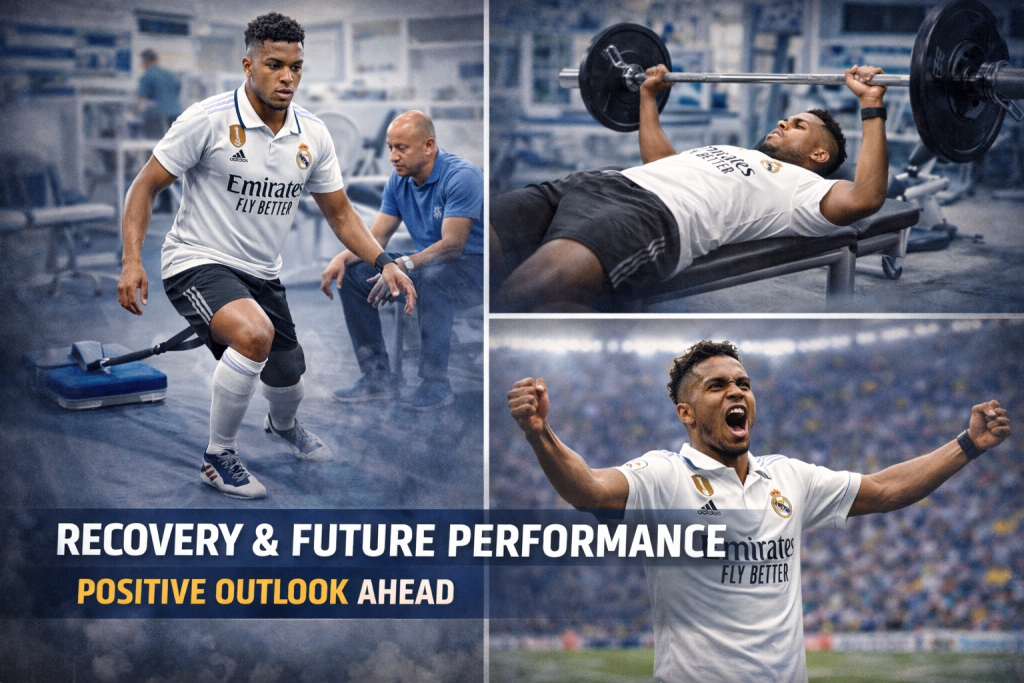
Elite clubs utilise:
- MRI diagnostics
- Ultrasound imaging
- Cryotherapy chambers GPS load monitoring
- Laboratories of biomechanical analysis.
The technologies also enhance the safety of the returns to the play dramatically.
Fan Response and Social Media Relations
Search terms like:
- Rodrygo injury update
- Blessure rodrygo
- Rodrigo injury timeline
When the news about medical progress is positive, positive sentiment usually follows.
The negative sentiment arises when there is a high value of fixtures.
Is the Rodrygo Injury a Tactical Foul?
In some cases, precautionary rest is caused by minor muscular pain, especially on the eve of critical matches. Critical reduction of loads averts serious trauma.
Therefore, something that sounds frightening in headlines might be the preventive sports management.
Expert Medical Outlook
Sports physicians concur that on the whole:
- Youth athletes heal at a faster rate.
- Diagnosis: Early diagnosis is better.
- Sprint return is controlled, which wards off recurrence.
The age and conditioning of Rodrygo are in favour of fast recovery.
Total Performance Impact Performance Analysis
| Impact Area | Short-Term Effect | Long-Term Outlook |
| Speed | Slight reduction during recovery | Fully restorable |
| Dribbling | Minimal effect | No lasting damage |
| Shooting Accuracy | Rhythm-dependent | Restored quickly |
| Tactical Role | Temporary shift | Stable upon return |
| Market Value | Slight speculation | Stable long-term |
Sentiment Evaluation Balanced
Negative Aspects:
- Tactical disruption.
- Media pressure.
- Short‑term absence.
- Fan anxiety.
Positive Aspects:
- Recovery opportunity.
- Long‑term preservation.
- Gap growth of tactical flexibility.
- Mental reset.
This is a two-way vision that is critical in the objective analysis of the Rodrygo injury story.
Some Queries
Q1: What is the most likely type of Rodrygo injury?
Ans: Most reports suggest mild muscular overload, such as Grade 1 strain or hamstring tightness, rather than a major tear.
Q2: How long does recovery usually take for such injuries?
Ans: Recovery usually takes 7–14 days for mild strains and 3–6 weeks for moderate muscle tears.
Q3: Why are wingers like Rodrygo more prone to injuries?
Ans: Because of their playing style, which involves high-speed sprinting, sudden direction changes, and explosive acceleration.
Q4: Does fixture congestion increase injury risk?
Ans: Yes. Short recovery time (often less than 72 hours between matches) increases muscle fatigue and micro-tear accumulation.
Q5: Will the injury affect Rodrygo’s long-term career?
Ans: No significant long-term damage is expected if proper rehabilitation protocols are followed.
Q6: What are the main treatment methods for such injuries?
Ans: Treatment includes rest, ice therapy, compression, controlled mobility exercises, and gradual return-to-play training.
Q7: What is the biggest risk during recovery?
Ans: The biggest risk is returning to play too early, which can increase re-injury probability by about 40%.
Q8: How does this injury affect team tactics?
Ans: The team may rely more on central attackers, midfield control, or winger rotation strategies.
Q9: Does psychological pressure affect recovery?
Ans: Yes. Players may experience performance anxiety, but injury recovery can also provide mental and tactical reset opportunities.
Q10: What is the probability of full recovery?
Ans: The probability of full recovery is very high, especially for young, well-conditioned elite athletes following modern sports science rehabilitation.
Summary
Although Rodrygo’s injury is worrying in the short run, it does not seem devastating from a medical perspective. The rehabilitation science of today has developed monitoring systems and professional load management, makes long-time damage unfeasible.
The situation highlights:
- The level of elite football.
- Strategy: The significance of preventive recovery.
- Media amplification in sport today.
- Tactical depth challenges.
Although the term rodrigo injury is either a temporary trend and the term blessure rodrygo might become popular across international borders, there are indications that the problem is a manageable setback instead of a career changing one.
Physical injuries in elite football are unavoidable; however, wise management converts them into a crisis into a recovery period.
The successful rebound to peak performance of Rodrygo is highly likely because of his athletic background, age and his work environment.